Table of Contents
The Tree of Life in Kabbalah: A Mystical Blueprint for the Cosmos and the Soul
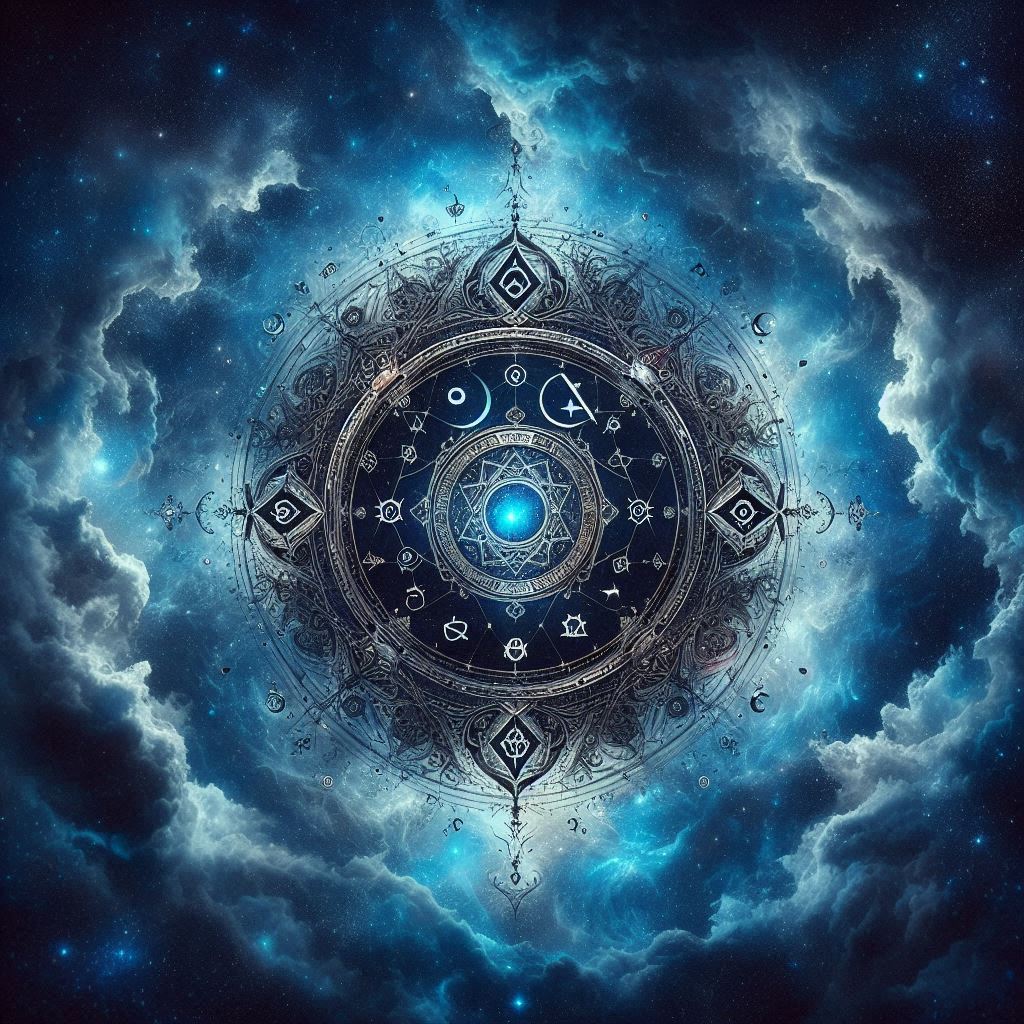
Kabbalah, the mystical heart of Judaism, offers a map to the hidden architecture of reality. At the center of this map stands the Etz Chaim, the Tree of Life. It is not a literal tree, but a profound metaphysical diagram—a symbolic glyph of ten spheres (Sefirot) and twenty-two connecting paths. For centuries, it has served as a dynamic framework for understanding the nature of the Divine, the process of creation, the structure of the human psyche, and the path of spiritual return. To explore the Tree of Life is to embark on a journey into the very DNA of existence.
Origins and Symbolism: From Ancient Mysteries to Medieval Maps
The conceptual seeds of the Tree are found in the Torah and later mystical texts. The term itself appears in Proverbs (3:18), describing Wisdom as “a tree of life to those who lay hold of her.” The primary Kabbalistic text that systemized the Tree is the Zohar (The Book of Splendor), a foundational work of Jewish mysticism compiled in 13th-century Spain. It was later Kabbalists, particularly in 16th-century Safed (like Rabbi Isaac Luria), who refined the structure into the familiar diagram used today.
The Tree is a portrait of emanation—how the infinite, unknowable Divine (Ein Sof, “Without End”) manifests a finite, knowable universe. It bridges the abyss between the Absolute and the Relative. The ten Sefirot are not “gods” but distinct, interdependent attributes or channels through which Divine energy flows and condenses, step by step, into material reality. They are vessels for consciousness, each with a unique character, yet all part of a single, organic whole.
The Ten Sefirot: The Divine Attributes Unveined
The Sefirot are typically arranged in three columns and four worlds (a concept we will explore later). Here is a brief journey down the Tree, from the Crown to the Kingdom:
- Keter (The Crown): The ineffable point of first emanation, the interface between Ein Sof and creation. It represents pure will, transcendent consciousness, and the unity beyond duality. It is the “nothingness” that contains all potential.
- Chokhmah (Wisdom): The first flash of inspired insight—a primal point, the masculine, active force of “what if?” It is the seed of all thought, undifferentiated and explosive.
- Binah (Understanding): The receptive, feminine vessel that receives Chokhmah’s point and expands it into structured understanding. It is the womb of analysis, differentiation, and contemplation, giving birth to the seven “emotional” Sefirot below. (These first three form the “Supernal Triad,” the realm of pure intellect, close to the Divine source.)
- Chesed (Loving-Kindness): The expansive, generous, and unbounded flow of love and mercy. It is the impulse to give, create, and nurture without limit.
- Gevurah (Strength/Judgment): The contracting, defining, and disciplining force. It sets boundaries, provides form, and enforces necessary judgment. The tension between Chesed (expansion) and Gevurah (contraction) creates balance.
- Tiferet (Beauty/Harmony): The central heart of the Tree, synthesizing Chesed and Gevurah into compassionate harmony. It represents truth, balance, and radiant beauty, often associated with the archetypal “Holy One, Blessed be He.”
- Netzach (Eternity/Victory): The driving force of ambition, endurance, and raw emotion. It is the charismatic energy of art, instinct, and the will to overcome.
- Hod (Splendor/Glory): The intellect applied to emotion—structure, communication, logic, and ritual. It is the force that gives form to Netzach’s impulses, like the lyrics to a melody.
- Yesod (Foundation): The channel and conduit that gathers all the energies from the Sefirot above and concentrates them. It is the subconscious, the imagination, and the reproductive force, preparing energy for final manifestation. Associated with the archetypal “Righteous One.”
- Malkhut (Kingdom): The final Sefirah, the fully realized manifestation. It is the physical world, the Divine Presence (Shekhinah) immanent within creation, and the vessel that receives all the energies above. It is both queen and bride, the completion of the Divine circuit.
The Dynamic System: Descent and Ascent
The Tree is not static. It describes two primary movements:
- The Lightning Flash (Descent of Divine Energy): The creative flow from Ein Sof through Keter, down to Malkhut in a zigzag path, like a lightning bolt. This is the process of creation (Yetzirah) and the path of Divine revelation.
- The Path of the Serpent (Ascent of Human Consciousness): The spiritual journey of a human being up the Tree, integrating each Sefirah’s lessons. This is the path of personal transformation (Tikkun, “repair”) and mystical return to the Source.
The 22 connecting paths correspond to the 22 letters of the Hebrew alphabet, linking the Sefirot and representing the complex interactions between the Divine attributes. They are the channels of relationship—the verbs connecting the nouns.
The Four Worlds: Layers of Reality
The Tree is also seen as existing simultaneously in four interconnected dimensions or “Worlds”:
- Atziluth (Emanation): The world of pure Divine archetypes, where the Sefirot are closest to Ein Sof.
- Beriah (Creation): The world of the Throne and pure intellect, the realm of archangels.
- Yetzirah (Formation): The world of emotion and formation, the abode of angelic choirs.
- Assiah (Action/Making): The world of material reality and physical manifestation.
Each Sefirah manifests differently in each of these four worlds, creating a holographic, multi-layered universe.
The Tree as a Mirror of the Soul: A Guide for the Writer
For the creative individual, the Tree of Life is an unparalleled psychological and spiritual map. It teaches that true creation mirrors the Divine process:
- Keter: The initial, ineffable spark of an idea.
- Chokhmah & Binah: The inspired flash of insight (Chokhmah) followed by the deep, structural contemplation of its meaning and form (Binah).
- Chesed & Gevurah: The boundless generative flow of prose (Chesed) disciplined and shaped by critical judgment, editing, and form (Gevurah).
- Tiferet: The beautiful, harmonious synthesis that becomes the heart of the work.
- Netzach & Hod: The compelling, emotional voice of the piece (Netzach) expressed through meticulous language, grammar, and technique (Hod).
- Yesod: The crafting of the narrative vehicle—the story, characters, and imagery that transmit the work’s essence.
- Malkhut: The finished manuscript, the physical book, the published work that enters the world and impacts the reader.
Furthermore, the concept of Tikkun Olam (repairing the world) is mirrored in Tikkun ha-Nefesh (repair of the soul). The writer’s journey up the Tree is one of integrating shadow (the harsh judgments of Gevurah, the confusion of Hod) with light (the love of Chesed, the harmony of Tiferet), aiming for the balanced wisdom of the Supernals.
Conclusion: A Living Tree
The Kabbalistic Tree of Life is ultimately a living system. It refuses to be pinned down as mere philosophy or theology. It is a contemplative tool, a meditative focus, and a dynamic model for understanding the interconnectedness of all things—the Divine, the cosmos, the human soul, and the creative act itself. It reminds us that the universe is not a chaotic accident, but a structured, intentional, and loving emanation. For the writer, or any seeker, it offers a timeless guide: to first receive the spark, then to shape it with balance and intention, and finally, to bring it forth into the Kingdom of this world, where it can take root, grow, and become a tree of life for others.
No responses yet