Table of Contents
More Than a Story: Why the Ramayana Is a Mirror to the Human Soul
There are stories we read, and then there are stories we live. The Ramayana is decidedly the latter. For over two millennia, this ancient Indian epic has not merely been told; it has been breathed, sung, danced, and woven into the very fabric of countless lives across South and Southeast Asia. To call it a foundational text is an understatement. It is a civilizational compass, a moral laboratory, and a deeply personal mirror reflecting our own struggles with love, duty, loss, and the elusive nature of perfect goodness.
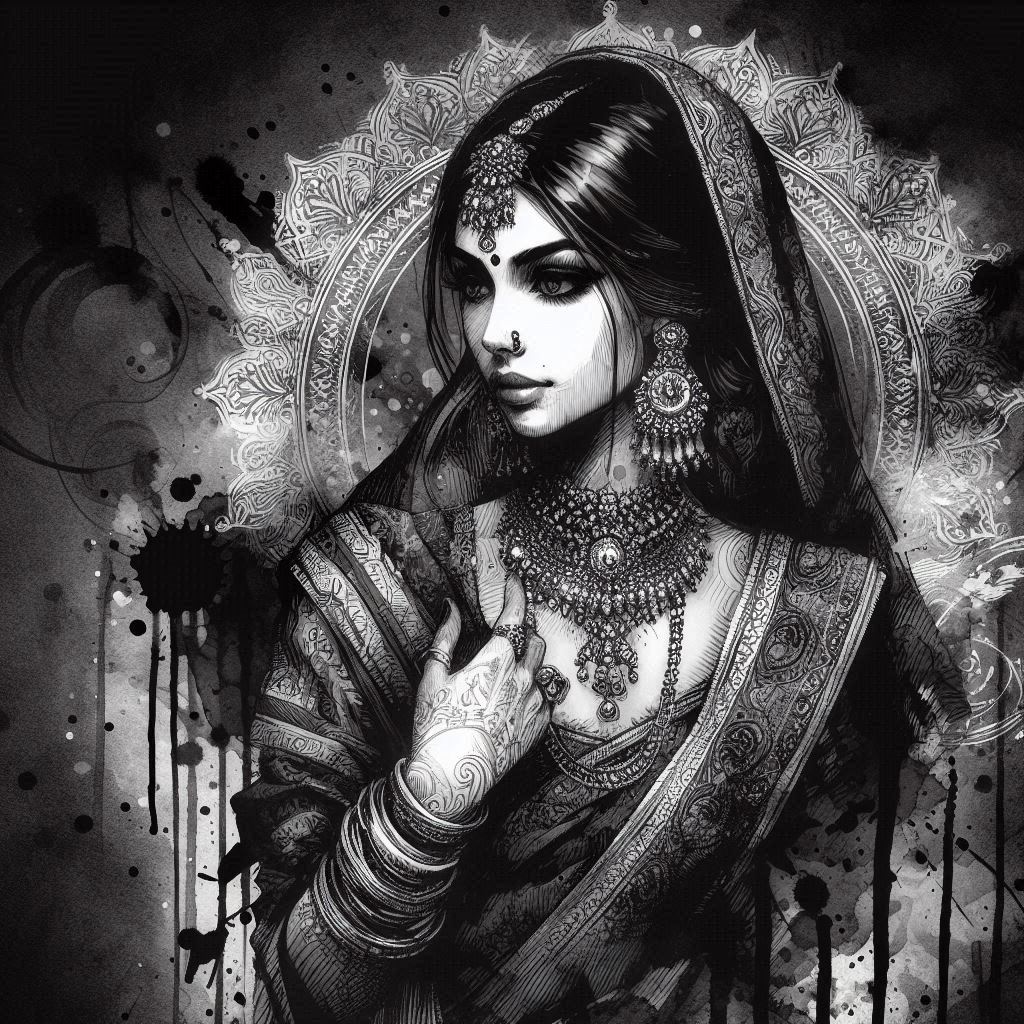
Attributed to the sage Valmiki, the Ramayana is, on its surface, a seemingly simple narrative: a righteous prince, Rama, is exiled from his kingdom, his wife Sita is abducted by the demon king Ravana, and with the help of an army of monkeys and a devout Hanuman, he wages a war to rescue her. It is a tale of good triumphing over evil, a hero’s journey as archetypal as any. Yet, to stop at the plot is to miss the forest for a single, albeit magnificent, tree. The genius of the Ramayana lies not in its destination, but in its labyrinthine journey—a journey through the thickets of dharma, the deserts of sorrow, and the peaks of devotion, where every character is a profound philosophical inquiry dressed in flesh and blood.
The Inescapable Gravity of Dharma
If the Ramayana has a central, gravitational force, it is dharma. The word itself defies a simple English translation. It is righteousness, but also duty, cosmic order, law, and the essential nature of a thing. The entire epic is a cascading exploration of dharma in its myriad, often conflicting, forms. Every pivotal moment is a dharma-sankata, a crisis of righteousness where there is no clear, painless choice.
Consider the epic’s inciting tragedy: the exile of Rama. On the eve of his coronation, he is told he must spend fourteen years in a forest. His dharma as a son demands obedience to his father, King Dasharatha. His dharma as a prince demands he secure the stability of the kingdom, even if it means personal catastrophe. He accepts this exile with a serene smile that is both superhuman and deeply unsettling. He calls it a “blessing,” a chance to uphold his father’s truth. This is not passive resignation; it is the active, fiery embrace of a principle over personal desire. In that single moment, Rama transforms from a beloved prince into Maryada Purushottam—the perfect man who upholds limits.
But this perfection comes at a terrible cost, and this is where the Ramayana’s profound honesty breaks through. Dasharatha’s dharma as a king who must honor a boon conflicts with his dharma as a father. His choice shatters him, leading to his heartbroken death. Queen Kaikeyi, the architect of the exile, acts out of a twisted dharma—a mother’s duty to secure her son’s future, manipulated by her own fear and jealousy. Is she a villain, or a tragic figure who weaponized a righteous principle for a personal end? The epic doesn’t give easy answers. It simply presents a chain of events where one person’s adherence to duty becomes another’s unmitigated calamity, illustrating that dharma is not a monolithic rulebook but a living, breathing, and often agonizing negotiation.
Sita: The Fire and the Fury of Silent Strength
If Rama is the perfect man, Sita is the perfect woman, but her perfection is a tempest, not a still pond. To see her merely as a victim awaiting rescue is to profoundly misread the epic. Sita’s journey is the beating, bleeding heart of the Ramayana, and her strength is forged in the very fires of her suffering.
Her moment of greatest agency is also her moment of greatest fall: the crossing of the Lakshmana Rekha. Drawn by her brother-in-law, this line of protection was a boundary of safety. Ravana, in disguise, lures her to cross it. Her decision to step over the line, driven by the dharma of hospitality and a deep, compassionate urge to feed a hungry mendicant, sets the war in motion. This is no simple act of feminine foolishness; it is a conscious moral choice where she prioritizes one ethical imperative over another, with catastrophic results.
What follows in Ravana’s Ashoka Vatika is not a portrait of passive despair. It is a masterclass in psychological resilience. Isolated, terrorized, and pressured by the demon king and his monstrous guards, Sita never wavers. Her defiance is not that of a warrior with a sword, but of a wronged queen with an unassailable truth. When she refuses Ravana’s wealth and power, when she rebukes him by comparing his might to Rama’s virtue, she becomes a flame of unassailable moral power, a sati of inner fire. Her strength is the strength of a seed pushing through concrete, an unbroken spirit in a cage.
And then comes the Agni Pariksha, the trial by fire. Victorious, Rama asks her to prove her purity before a public that has started to whisper. This is arguably the most gut-wrenching moment in all of epic literature. The woman who endured a year of captivity for her husband must now prove her faithfulness to him. She does not weep or beg. With a dignity that burns brighter than the flames she walks into, she commands Lakshmana to prepare a pyre. When the fire god Agni himself delivers her, unsullied, she is vindicated. But a question is forever seared into the reader’s conscience: what was the cost of this vindication? And what kind of victory requires the victim to prove her innocence? In this act, Sita becomes not just a goddess but an icon of profound, silent, and shattering defiance against societal judgment.
Hanuman: The Anatomy of Devotion
If Rama and Sita represent the complex ideal, Hanuman represents the purest, most accessible force in the universe: love in action. He is a deity who has become the most beloved figure in the epic, not despite being a monkey, but perhaps because he embodies a state of devotion stripped of ego and self-doubt.
The entirety of Hanuman’s arc is a lesson in the power of forgetting one’s limitations. As a child, he was cursed to forget his own divine powers until someone reminded him of them. We are all Hanuman in this sense, born with immense potential, living a life of self-imposed limitation, a forgotten godhood. It is only when his beloved Lord’s mission demands it—when Sita must be found—that Jambavan, the ancient bear, awakens him to his true self.
The moment Hanuman realizes his own strength is one of the most exhilarating transformations in storytelling. He doesn’t just become strong; he becomes a vessel for a sacred mission. His impossible leap across the ocean to Lanka is not a feat of muscle but of faith. Every obstacle—a mountain that offers him rest, a serpent-demoness that attacks him—is met not with brute force but with ingenious, humble resolve. He shrinks and expands, becomes a giant and a microbe, showing that true power is adaptive, humble, and completely in service to love.
His time in Lanka is a masterclass in diplomacy, intelligence, and spiritual self-control. He finds Sita in her lowest moment, and his mission is singular: to deliver hope. A tiny, unrecognizable monkey in a city of giants, he speaks the name of Rama, presents the signet ring, and becomes a bridge between a pining wife and a grieving husband. He could burn the whole city, and he does, but only after letting Ravana know that his destruction was a calculated warning, a display of what one devoted soul can do. Hanuman is not just a character; he is the living, breathing embodiment of the idea that bhakti—devotional love—is the most potent force in the cosmos, capable of setting worlds on fire and mending broken hearts with equal power.
The Villain’s Grandeur: Ravana’s Fatal Knowledge
What is a hero without a villain worthy of his steel? Ravana is arguably the most sophisticated antagonist in world mythology, a being of staggering contradictions. He is a majestic, ten-headed demon king, a peerless scholar of the Vedas, a master of the veena, and a supreme devotee of Lord Shiva. His kingdom, Lanka, is a city of gold, a testament to prosperity, architectural genius, and a well-ordered society. He is not the caricature of an evil, cackling monster. He is a magnificent, tragic soul who has everything, and whose downfall is born from that very completeness.
Ravana’s tragedy is the tragedy of the intellect divorced from wisdom, of power unmoored from humility. His ten heads are a symbol of his immense knowledge, but that knowledge is governed by an ego gone rampant. He knows the scriptures; he knows the consequences of adharma; he knows what is right and wrong. Yet, when his desires—specifically his unchecked lust and arrogance—demand it, he uses his intellect not to find the truth but to construct brilliant, convincing justifications for his own transgressions. His is the fatal disease of the powerful and the learned: the belief that one is above the universal law.
His refusal to listen to his own wise counselors, his abduction of Sita, is not a simple act of villainy. It is a self-destructive, nihilistic dive propelled by a wounded ego. Sita’s rejection is an existential insult he cannot tolerate. When his beloved brother Vibhishana, the very voice of conscience, abandons him for the side of righteousness, it is the final seal on his doom. And in his final battle, when Rama stands before him, Ravana is given a last chance to repent. He refuses. The supreme knower of all truths chooses to defy the ultimate truth. His death is a profound release, a liberation of a great soul who, even in his final moments, is granted moksha by the very God he fought against. Ravana is the eternal warning to each of us: what does it profit a person to gain the whole world of knowledge, yet lose their own soul to ego?
A Tapestry of Woven Shadows: The Unforgotten Others
A great epic endures because its minor characters are not mere props. They are fully realized souls whose own stories are often more relatable than the god-like struggles of the protagonists.
- Lakshmana, the shadow-brother, is the personification of righteous fury and unwavering loyalty. He is the one who truly feels the burning injustice of the exile, who would have destroyed Ayodhya to make Rama king. Where Rama is the mind, serene and detached, Lakshmana is the heart, passionate and reactive. His own fourteen-year sacrifice—a celibate vigil guarding his brother and sister-in-law without sleep—is an epic of silent, self-effacing love in itself.
- Bharata, the brother for whom the kingdom was stolen, lives in a self-imposed exile of the soul. When he learns of his mother’s treachery, his fury is volcanic. He refuses the throne, travels to the forest to beg Rama to return, and when his pleas fail, he places Rama’s sandals on the throne as a symbol of legitimate rule and lives as a hermit in a hut outside the city. Bharata’s life is a testament that sometimes the greatest sacrifice is not dying for a cause, but living every single day in its agonizing, devotional wait.
- Shabari, the tribal woman, offers a theology of pure intent. Her lifelong devotion is consummated not with grand ritual but with berries she has tasted first to ensure their sweetness for her Lord. Her small episode is a radical, democratic declaration that the divine dwells not in the complexity of ritual but in the sincerity of a loving heart.
- Urmila, Lakshmana’s wife, is the epic’s unsung heroine of silence. When Lakshmana asks for her permission to accompany Rama, she grants it, and his parting gift to her is a potent request: that she take his share of sleep for the fourteen years. She agrees. While the epic rages on, Urmila disappears into a fourteen-year-long dream, a sacrifice so complete it goes entirely unnoticed. Her story is a haunting whisper of all the invisible sacrifices made by women, swallowed by history’s silences.
The Legacy: An Eternal Present
To write an essay about the Ramayana is to attempt to catch a river in a cup. The epic’s life force spills over every attempted boundary. It is not a fossil of a bygone era; it is a dynamic, living tradition, constantly reinterpreted. It has been the profound philosophical inquiry of Valmiki’s Sanskrit poetry, the ecstatic devotional outpouring of Tulsidas’s Ramcharitmanas, the soul-stirring shadow puppetry of Indonesia’s Wayang Kulit, the elegant dance-drama of Cambodia’s Royal Ballet, and the vibrant, pop-art murals of Thailand’s temple walls. It lives in the daily greetings of millions—Jai Siya Ram!—and in the autumnal glow of a million candles on Diwali.
Its capacity to be both a conservative ideal and a radical force for social commentary is its ultimate paradox. In a world of moral gray, it gives us the black and white of Rama and Ravana. But then, in the very next breath, it plunges us into the deepest grays possible: the ethical quagmire of the Agni Pariksha, the killing of the monkey king Vali from hiding, the deeply problematic and heartbreaking final abandonment of a pregnant Sita. These episodes have been debated for centuries, and they should be. They ensure the Ramayana is never a dead artifact but a living conversation, a moral gymnasium where we go to exercise our own ethical understanding.
Ultimately, the Ramayana is a map of our own inner geography. Ayodhya is the heart, the kingdom of our consciousness. Rama is the soul, the divine principle in exile. Sita is its divine energy, its shakti, lost in the world of the senses. Ravana is the ten-headed ego with its mastery of rationalizations. Hanuman is the breath, the devoted life-force that can bridge the impossible gap between the grieving soul and its lost light. The war is our daily, internal struggle.
We return to this story not to learn something new, but to remember what we have forgotten. It whispers to us that we are simultaneously the exiled king, the captured queen, the devoted servant, and the ten-headed demon. And within its vast, compassionate, and eternally relevant universe, it offers a simple, profound promise: no matter how deep the forest of your exile, no matter how dark the night of your sorrow, the bridge of devotion can be built, the city of ego can be razed, and the light of an eternal, righteous love will, in the end, always return home. The story is true. It has always been true. And that is why we will never, ever stop telling it.
No responses yet